California is taking measures to approve virtual power plants (VPPs) to compete in the statewide reliability market.
The Senate Energy, Utilities, and Commerce Committee voted today to approve the Clean Local Electricity Act (SB 913). Proposed by Senator Josh Becker (Menlo Park), SB 913 will provide more opportunities for solar rechargeable batteries, electric vehicle chargers, heat pumps, and other on-site energy devices to participate in California's resource adequacy program, helping to meet peak demand and reduce costs for everyone.
Californians are struggling to cope with rising electricity bills, and we need to use our power grid more intelligently and cost effectively, "Becker said. We should not always build expensive new infrastructure to meet the demands of several peak periods, but should better utilize the resources already available at home. Millions of Californians already have tools such as smart thermostats, home batteries, and electric vehicles that can help support the power grid. SB 913 ensures that we can use these resources to reduce costs, minimize pollution, and improve reliability. ”
The current CPUC program aims to ensure that the state has sufficient power generation capacity to meet peak energy demand, and to utilize alternative solutions to traditional power sources during periods of maximum demand, excluding most of California's growing customer on-site battery packs. CPUC does not calculate any electricity output from the customer site to the grid. Batteries in homes and businesses can only earn points for reducing customers' personal electricity consumption, and there are no incentives for the device to send electricity back to the grid. This limits the ability to create virtual power plants, which can replace more expensive and frequently polluting power plants to provide peak power generation.
SB 913 provides a common sense solution that enables customer battery networks to provide more energy to VPPs. It requires CPUC to consult with CAISO and the California Energy Commission to develop a method for providing credit for energy output from customer devices to the grid.
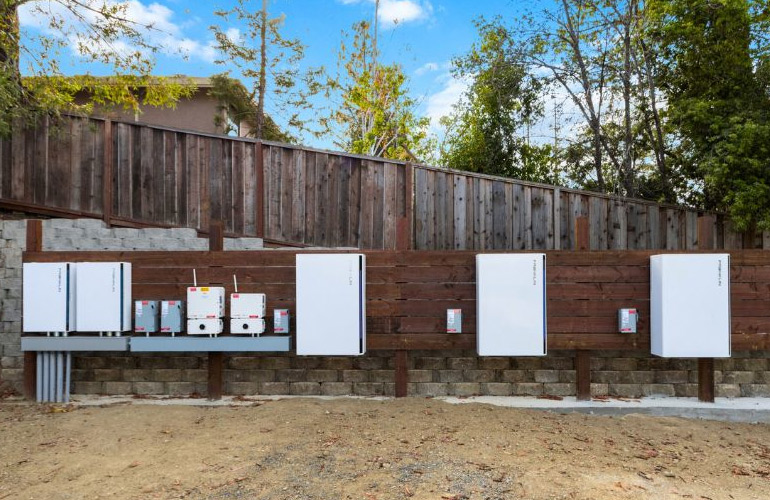
Jon Hart, Director of Policy at CALSSA, said, "Utilizing solar rechargeable batteries and other customer devices at the cheapest option is an important strategy to make energy affordable in California." "California currently has 300000 solar rechargeable batteries installed in garages, campuses, and farms across the state, with an additional 2000 added every week. They have already lowered costs for everyone, but we are not fully utilizing them.
This year, the legislative body will also consider the Electricity Utilization Act (AB 1975) proposed by Congressman Nick Schultz (Burbank). The bill will require utility companies to better utilize the grid capacity already built and paid for in the state, thereby helping to lower energy prices in California.
Traditionally, whenever utility companies estimate that they may need to provide more energy, they expand the power grid. With the improvement of electrification and the increase of data centers, the demand for grid capacity will grow faster than ever before. Expanding substations and expanding other components of the power grid is both expensive and slow, thereby driving up energy prices. Public utility companies may not be able to expand the power grid quickly enough at all costs to achieve the required scale of transportation and building electrification.
Traditional methods are favored by utility companies because their profits are based on the percentage of dollars spent on the grid.
AB 1975 provides a modern solution that can meet the growing demand for electricity at the lowest cost and with efficient speed. Customer devices can operate in a coordinated fleet to balance power supply and demand within the constraints of the grid. The timing of charging electric vehicles can be flexible and will not affect the driver's needs. The batteries installed in houses, campuses, and other buildings across California are connected to the internet and can be remotely dispatched according to grid demand. Building energy control can adjust electricity usage time. These combination assets create grid flexibility.
AB 1975 will require CPUC to create grid utilization indicators and annually establish minimum standards for PG&E, SCE, and SDG&E based on these indicators. In order to meet the constantly improving standards, utility companies will establish load flexibility plans to encourage customers to shift their electricity consumption from the grid to off peak hours.
Hart said, "Building highways large enough so that peak hours don't slow down would be extremely expensive, but that's basically what the state is currently doing in terms of the power grid." "If utility companies use the load flexibility tools available today, California can increase electricity consumption without correspondingly increasing grid costs.

 español


 Sistema de montaje en tierra
 sistema de montaje en techo
 Sistema de montaje de cochera
 sistema de montaje de granja
 Easy Solar Kit
 sistema de seguimiento solar
 inversor solar
 Accesorios solares
 RM502, Sihai Smart Zone, No.189, Fanghu West Road, Huli District, Xiamen, Fujian, China.